Executive Summary
A balanced artificial tree catalogue runs on three controls: five to seven species families, a four-step height ladder from 1.2 m to 3.5 m, and three price tiers split roughly 60/30/10. Stores that skip the structure buy what looks impressive and discover the failure at stock-take: one species hogs the cash, no unit between the 1.2 m entry pot and the 3 m hero, and customers who browse, compare — and leave. The framework below is the stocking checklist that showroom buyers can apply to their very first container order.

1. What Goes Wrong Without This
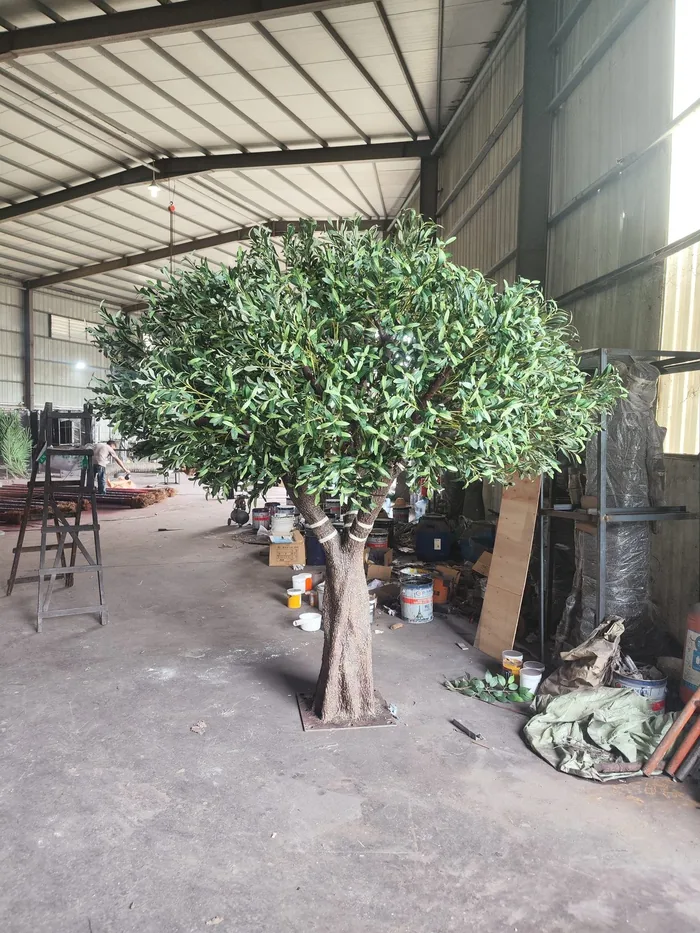
The default failure is the single-species impulse. A distributor sees olive trees trending, spends the whole opening budget on thirty units of one species in one height, and inherits two problems at once. First, demand concentration: when the local taste moves — and in interiors it moves every 12–24 months — the entire inventory ages together. Second, visual monotony on the floor: thirty units of the same silhouette read as a warehouse, not a curated store, and the units compete with each other instead of selling each other.
The opposite failure is the hero-heavy catalogue. Ten per cent of a healthy stock mix belongs in 3.5 m statement trees; stores that invert the ratio lock most of their cash into slow movers that occupy prime floor space, need rigging to reposition, and wait months for the one client with a double-height villa lobby. Cash conversion is the quiet casualty: a 1.5 m entry-tier unit turns over in weeks, a 4 m hero can sit a season.
The third failure has no inventory excuse — it is the missing middle. A customer who wants "something between the desk plant and the atrium tree" finds a gap between 1.8 m and 2.4 m in most poorly-built ranges, and that gap is precisely where restaurant fit-outs, clinic receptions and boutique lobbies buy. Without a height ladder, the store cannot even articulate the upsell; the customer buys the entry unit, and the margin that a mid-tier unit carries stays on the table.
The fourth failure costs institutional accounts rather than retail ones. A catalogue assembled without documentation discipline — batch fire reports per SKU, pot and planter specifications written down, golden-sample photos archived — cannot answer the one question that hotel, restaurant and mall buyers all ask before a purchase order: "which unit is certified, and by which test?" Retail customers never ask; institutional buyers never skip it. A store that loses two restaurant fit-outs in a year to that question has lost more margin than the paperwork would ever have cost, and the competitor who answered it usually inherits the account permanently.
2. The Decision Framework
Work the following six checks in order; each one produces a number that the next check depends on.
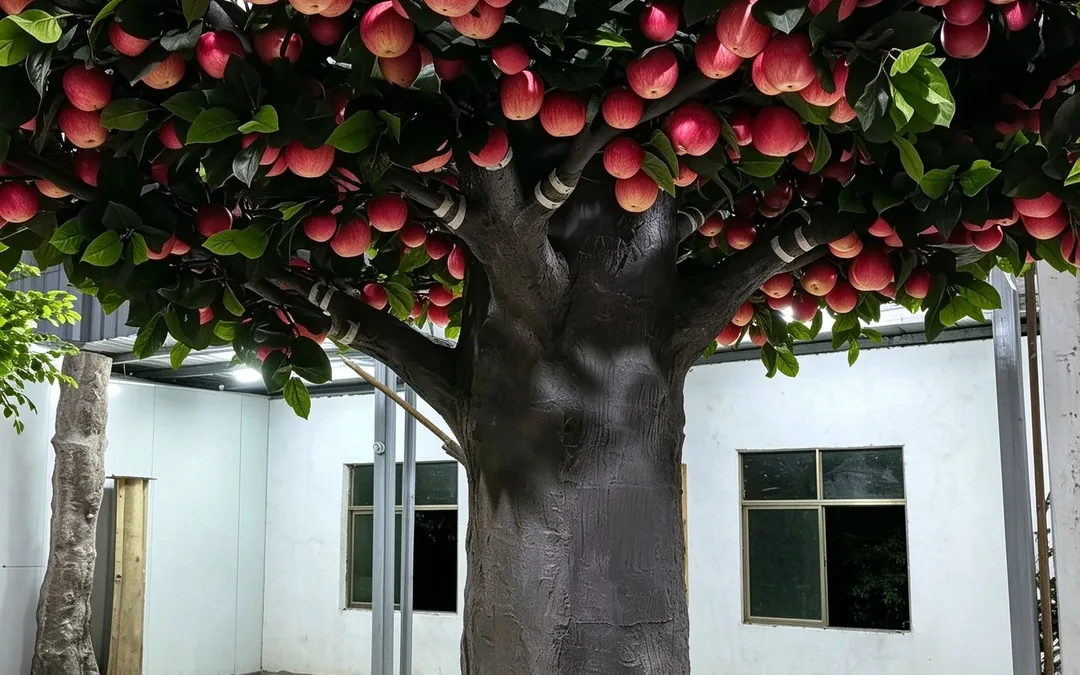
1. Fix the species families first — five to seven, no more. Families, not species: one Mediterranean evergreen (the olive tree remains the default anchor), one dense-canopy interior tree (ficus types), one palm family (areca or fan palm for texture), one fruiting or flowering accent, one tropical broad-leaf, and optionally one topiary/topiary-cone family for formal exteriors. Fewer than five families and the floor looks repetitive; more than seven and every re-order splits into uneconomic per-SKU quantities.
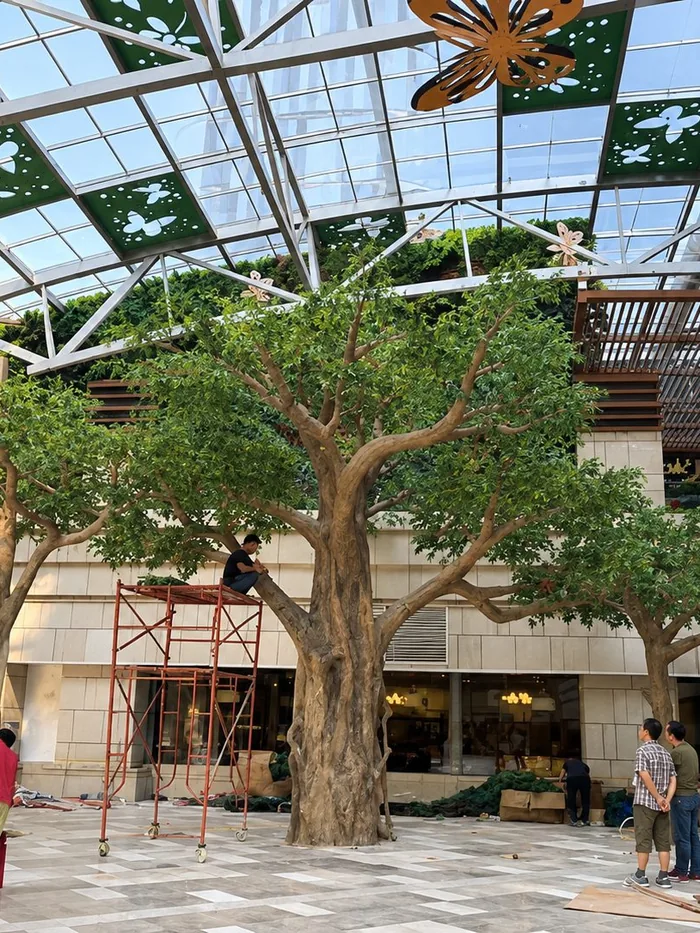
2. Set the height ladder before the unit counts. Four steps cover real demand: 1.2–1.5 m (desk-and-console), 1.8 m (standard room corner), 2.4 m (lobby and restaurant), 3.0–3.5 m (double-height residential and mall thresholds). Every family in the catalogue should exist in at least two adjacent steps; a family that only exists at 3 m is a project product, not a retail line.
3. Tier the price bands into three. Entry, mid and hero. The tiers exist to make upselling effortless — a customer who enters for an entry-tier unit should see a mid-tier of the same family within one step of the ladder. Pricing without printed numbers is normal in this trade (quotes follow pot size, foliage density and stem engineering), but the bands must be deliberate, because they decide what the floor staff reach for first. The structural markers between tiers should be visible from a metre away: nursery pot vs finished planter, single trunk vs branched canopy, flat print foliage vs moulded PE with vein relief. When the tiers look identical to a browsing customer, the upsell dies at the price conversation; when the structure visibly upgrades, the staff conversation starts from value instead of discount.
4. Check container economics per tier. Entry and mid tiers travel as whole potted units in carton stacks; hero tiers over 3 m ship engineered knock-down with re-assembly on site. A catalogue whose opening order cannot fill a mixed container across its own tiers is over-weighted somewhere — re-balance until 20-foot or 40-foot consolidation closes cleanly.
5. Attach fire documentation to every tier, not just the heroes. Restaurants and clinics buy mid-tier units, and mid-tier units go into public interiors subject to the same NFPA 701 or EN 13501-1 requirements as any lobby tree. A catalogue that can produce batch test reports per SKU tier wins institutional accounts that a hero-only folder cannot.
6. Plan the rotation before the first re-order. Reserve five to ten per cent of SKUs for seasonal or trend-led refreshes — a fruiting accent one season, a sculptural branching tree the next. The rotation layer is what makes the core 90 per cent durable instead of dated.

3. Numbers, Tiers and Timelines
| Catalogue Layer | Share of SKUs | Height Band | Price Tier | Lead Time / Restock Rhythm |
|---|---|---|---|---|
| Core sellers (anchor families) | ~60% | 1.2–1.8 m | Entry–mid | Restock every 45–60 days |
| Mid statement units | ~25% | 2.0–2.4 m | Mid | Production 25–35 days |
| Hero specimens | ~10% | 3.0–3.5 m+ | Hero | 40–60 days incl. engineering |
| Topiary & accent greens | ~5–10% | 0.6–1.0 m | Entry | 20–30 days, carton-stacked |
| Seasonal rotation layer | 5–10% of orders | Any step | Mid | Order 30–45 days ahead of season |
Three readings of the table. The 60/30/10 split is a cash-flow instrument, not a display rule: it keeps the majority of working capital in units that turn quarterly while still giving the floor one or two units that photograph like a showroom hero. The height bands are cumulative — a store that only stocks 1.2 m and 3.5 m will quote a restaurant job and lose it to a competitor whose ladder covers 2.4 m. And the lead-time column is the argument for holding stock at all: entry tiers restock fast, but heroes are made to order, so the one 3 m unit standing on the floor is the sample that sells the next five.
One number the table does not show, but which the structure produces, is the per-unit container cost. When an opening order consolidates cleanly across tiers — carton-stacked entry units below, individually boxed mid units in the middle, knock-down heroes at the top — the mixed container's occupied volume typically drops by a quarter compared with shipping whole potted units for everything, and freight divides across more sellable units. That arithmetic is why the ladder is written before the shopping list: the same thirty SKUs, sequenced differently, can cost visibly different amounts to put on a floor — and a buyer who quotes the container before fixing the tiers is pricing an accident, not a plan.
4. How to Apply It to a Live Project
In the inquiry stage, send the supplier the ladder, not a shopping list: "entry tier in two families, mid tier in three, one hero" quotes faster and consolidates better than thirty separate SKUs priced one by one. During sampling, verify the two adjacent height steps of each chosen family side by side — silhouette continuity across the ladder is what makes a floor display look curated, and it is also the point where weak moulds reveal themselves.
Before production, lock the documentation per tier: batch test reports for every unit destined for public interiors, and engineering drawings for any hero over 3 m that will be fixed at a mall threshold — installed examples of that coordination are visible on the projects page. At shipment stage, check the consolidation plan against the container: entry tiers stack, mid tiers carton individually, heroes travel date palm-style with fronds and trunks separated where the species allows. On the floor, arrange displays to walk the customer up the ladder in one direction — entry at the window, hero at the back wall — so the three price tiers do their selling without a word from staff.
The cadence after the first sell-through is where catalogues either compound or erode. Read the ladder, not the total: which family sold through both of its adjacent height steps, which tier sat longest, and whether any hero was bought for a project that could have been quoted from a 2.4 m unit instead. Re-order the sold-through steps first and in the same colour batches as the opening order — silhouette and tone consistency between the first and second batch is what makes the floor look like one store rather than two shipments. Hold the hero layer deliberately thin; replace a sold hero only when the project pipeline shows another double-height job, because a hero bought on hope converts floor space into storage. And review the rotation layer every season against actual footfall: an accent that draws browsers but no buyers has still done part of its job if the customers left with a core-family unit, but an accent that draws nothing gets retired without sentiment.
5. Commercial Contractor FAQs
Q: How many species families should a first catalogue carry?
A: Five to seven. Two or three families cannot fill a mixed container economically; ten or more split the opening budget into quantities too small to colour-match or price competitively. Families also flex with the seasons in a way single species cannot — the palm slot can be areca this quarter and fan palm the next without disturbing the ladder.
Q: What is the right height mix for a showroom floor?
A: Four steps — 1.2–1.5 m, 1.8 m, 2.4 m, 3.0–3.5 m — with the stock weight concentrated at the first two steps and display weight at the upper two. Roughly 60 per cent of units belong at entry–mid heights because that is where repeat demand lives; the upper steps sell the brand and the institutional jobs.
Q: How should a store tier pricing without printing prices on the floor?
A: Tier by structure, not by sticker: entry tier uses nursery pots and single-trunk builds, mid tier adds finished planters and denser foliage, hero tier carries engineered cores, mechanical fixing points and full fire documentation. Quote sheets then follow the tiers, and staff upsell by moving one step up the ladder within the same family.
Q: How often should the catalogue be refreshed?
A: Keep the core 90 per cent stable and rotate five to ten per cent of SKUs seasonally — a fruiting accent before the festive period, a sculptural branching tree ahead of design-fair season. Re-order the rotation layer 30–45 days before it should appear on the floor, and retire any family whose two adjacent ladder steps have not sold through in two seasons.
Project Engineering Support & CAD Requests
For buyers building a first catalogue, our team works from the ladder format directly: send the intended tiers, height steps and target market, and we return a per-family specification — species options, pot and planter structure, fire documentation set and consolidation plan for the opening container. We can quote the full ladder in one pass, supply golden-sample photos per SKU and hold batch references for re-orders. Message the engineering desk on WhatsApp to review a stocking plan:
👉 Chat with Structural Engineering on WhatsApp (Instant Project Review)