How Are Large Artificial Trees Shipped and Installed?
Freight and installation are decided at the drawing stage, not at the warehouse. A 9 m atrium tree that looks perfect in a rendering still has to fit through a container door, a loading bay and a goods lift, then be anchored safely in position. This guide sets out the packing and fixing decisions that a project team should confirm before releasing production.
Short answer
Large artificial trees ship as mixed loads in 40HQ containers where possible: foliage is flat-packed, planters are nested, and trunks above 6 m are engineered as knock-down sections with bolted flanges. Each order ships with a packing list and labelled assembly drawings. On site the base is anchored or ballasted to the substrate, and supervised installation is available for very large atrium assemblies.
What fits into a 40HQ container?
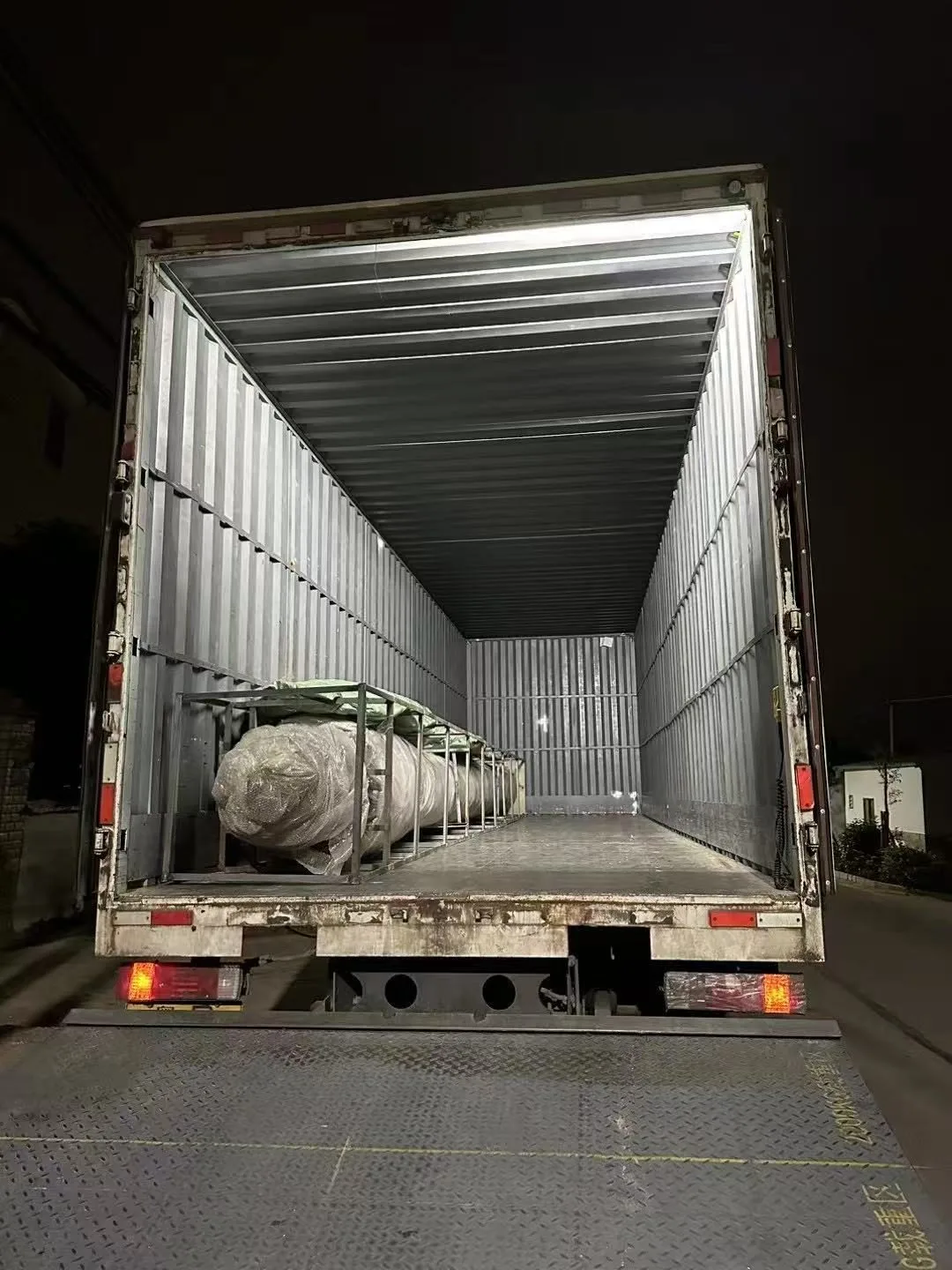
Container planning starts with cubic metres, not with the number of trees. Knock-down assemblies, branch frames, flat-packed foliage and nested planters occupy very different volumes, so a mixed order across several SKUs often packs more efficiently than a single-SKU order. Our published projects describe how mixed large-tree orders are planned against 40HQ capacity, with a packing sheet that controls freight. Shipping is arranged from Yantian Port in Guangdong, and the packing sheet is what the freight forwarder and the receiving site both work from.
- Plan against CBM and longest component length, not tree count.
- Mixed-SKU loading usually improves container utilisation.
- The packing sheet is shared with forwarder and receiving site.
When is knock-down shipping used?
Assembled shipping is preferred where dimensions allow, because it reduces on-site labour. Above 6 m, or where a goods lift limits the longest piece, the trunk is split into bolted sections and the canopy is detached. The joint sits inside the sculpted bark profile, and the assembly drawing numbers each section. The approval pack should state the section count, the longest single component, the assembled weight and the access route through the building.
- Prefer assembled shipping where the access route allows it.
- Above 6 m, specify bolted knock-down assemblies and a labelled sequence.
- Check goods lift dimensions, door width and turning radius.
What belongs in the packing list?
A useful packing list maps every carton to an assembly step. It lists each knock-down assembly by number, branch frames by orientation, foliage sprays by SKU and colour, planter or base components, fasteners and spare parts, plus the document pack. Pre-shipment verification covers packaging, labelling and container loading before dispatch. For projects with third-party inspection, the inspection photographs are taken against this same list so nothing is double-counted or missed at receiving.
- Carton-to-assembly-step mapping for trunk, branches, foliage and base.
- SKU, colour and quantity for each foliage spray.
- Fasteners, spares and the document pack listed separately.
How is a large tree anchored on site?
Fixing depends on the substrate and the canopy area. A steel base plate with mechanical anchors into structural concrete is typical for large interior trees; ballasted planters are used where the slab cannot be drilled; outdoor builds add wind exposure to the calculation. The drawing set should show the anchor pattern and the base footprint, and the enquiry should say who verifies the substrate. Installation guidance ships with the order, and supervised installation is available for very large atrium assemblies.
- Base plate with mechanical anchors where the slab permits drilling.
- Ballasted planter where the substrate cannot be penetrated.
- Anchor pattern, footprint and substrate responsibility in the drawing set.
What does supervised installation cover?
For very large atrium assemblies, a supervisor can attend the unloading, check the packing list against delivered cartons, confirm the assembly sequence and inspect the anchorage before the canopy is dressed. This is a coordination service for the contractor's crew rather than a substitute for local structural sign-off. Lead times are 25-35 days for standard heights and 45-60 days for custom builds above 6 m, and the installation window should be booked against those dates.
- Unloading check, assembly sequence and anchorage inspection.
- Canopy dressing and final visual check with the contractor.
- Book the installation window against the stated lead time.
| Tree size | Packing approach | On-site work | Lead time |
|---|---|---|---|
| 1.2-3 m | Assembled or flat-packed foliage | Positioning and planter finish | 25-35 days |
| 2-6 m | Assembled where route allows | Anchorage or ballast check | 25-35 days |
| 6-12 m | Knock-down trunk, nested planters | Bolted assembly, supervised option | 45-60 days |
| Mixed 40HQ order | CBM-planned mixed SKUs | Receiving against packing sheet | Per order schedule |
Frequently Asked Questions
Can different tree species share one container?
Yes. Mixed loading across SKUs is supported and often improves container utilisation, because flat-packed foliage, nested planters and knock-down assemblies occupy different volumes.
What is the lead time for a custom tree above 6 m?
Standard heights take 25-35 days; custom builds above 6 m take 45-60 days. The supervised installation window should be booked against the production finish date.
Do you install the tree on site?
Installation guidance ships with every order, and supervised installation is available for very large atrium assemblies. Local structural sign-off remains with the project's own engineer.
Confirm the access route, the substrate and the packing list before production is released. Freight and anchorage problems are cheap to solve on a drawing and expensive to solve on site.